A data-backed framework for CEOs, department heads, and team leaders who are serious about performance, culture, and ROI.
Why Offsite Retreats Are a Strategic Business Imperative, Not a Perk
The word "retreat" carries baggage in corporate culture. For some executives, it conjures images of trust falls, motivational posters, and two days away from the inbox that accomplish very little. That perception is not just wrong, it is expensive. The research on what well-designed offsite gatherings actually produce for organizations is compelling enough to reframe how serious leaders think about team investment entirely.
According to a study published by Harvard Business Review on meeting science, the context and physical environment in which collaboration occurs measurably affects the quality of decisions and the depth of interpersonal trust generated. Moving a team out of its habitual workspace is not a luxury gesture, it is a structural intervention that disrupts unproductive cognitive and social patterns baked into daily office life.
Before exploring the how, consider the scale of the problem a well-executed retreat is designed to solve. High-performing teams are not built through performance reviews and Slack messages. They are built through shared experience, aligned vision, and the kind of candid conversation that rarely happens under fluorescent lights with a packed calendar overhead.
These numbers frame the retreat not as a line item to cut, but as a targeted investment in the conditions that make everything else in your organization work better.
Core Theme 1: The Psychology of Place, Why Environment Changes Everything

Cognitive Flexibility and the Incubation Effect
Environmental psychology has a well-documented concept called cognitive fluency: the ease with which the brain processes information is influenced heavily by its physical surroundings. Cluttered, familiar, high-stimulus office environments trigger what researchers call "exploitative thinking," a mode where the brain defaults to existing solutions and known patterns. Novel environments, by contrast, activate "exploratory thinking," the neural state associated with creativity, lateral problem-solving, and openness to new ideas.
This is not metaphorical. Studies using fMRI imaging have shown that exposure to natural settings reduces activity in the prefrontal cortex's rumination centers while increasing activity in regions associated with associative and divergent thought. A 62-acre private woodland setting in New Hartford, Connecticut, does not just feel different from a downtown conference room; it is neurologically different for the people inside it.
Serenity Woods operationalizes this principle by design. The property sits at the end of a half-mile private driveway, removing the psychological "on-ramp" of city traffic, coworker interruptions, and the ambient noise of routine. By the time a team walks through the doors of the log cabin, the brain has already begun downshifting from reactive, task-based mode toward the reflective, generative state that strategic thinking requires.
The Dissolution of Hierarchy in Natural Settings
One of the most underappreciated dynamics in leadership psychology is how rigidly a physical environment enforces social hierarchy. The corner office, the head of the conference table, the executive-only parking spaces: these are not incidental features of corporate life. They are behavioral architecture. They tell everyone in the organization where power lives, which directly suppresses the candid upward communication that leaders claim to want.
Research from Stanford's organizational behavior group has consistently shown that informal settings reduce status-related anxiety, making it significantly more likely that junior team members will surface genuinely important insights, flag problems early, and engage as true contributors rather than note-takers. When a VP and a project manager are both working through a problem around a kitchen island or sitting beside a fire pit under the same sky, the structural cues of corporate hierarchy fade in a way that no "open door policy" memo can replicate.
Problem-Solving in Expansive Spaces
There is a reason the phrase "thinking big" involves spatial metaphor. Research published in the Journal of Environmental Psychology found that ceiling height and room volume correlate directly with abstract, relational thinking. High-ceilinged spaces promote the kind of conceptual, big-picture thinking that strategic planning demands, while low-ceilinged, partitioned spaces encourage detail-oriented, granular focus.
The Great Room at Serenity Woods, with its soaring ceilings and knotty pine craftsmanship spanning the full scale of the main cabin, is not just an aesthetically impressive space. It is a functionally superior environment for vision-setting sessions, company-wide realignment workshops, and any conversation where you need your people thinking about the company's future rather than next Tuesday's deadline. The full range of indoor and outdoor spaces available allows leaders to match the physical environment to the cognitive demand of each session, a principle professional facilitators call "environmental scaffolding."
Core Theme 2: The Unplugging Factor, Deep Work, Creativity, and Real Connection

The Science of Deep Work and Why Your Office Destroys It
Cal Newport's foundational research on Deep Work quantified something most leaders feel but struggle to address structurally: the modern office, with its constant notifications, open-plan interruptions, and fragmented calendar, makes cognitively demanding work nearly impossible. Research on interruptions found that it takes an average of 23 minutes to return to a state of full concentration after a single interruption. In a typical office environment, most employees are interrupted every 3 to 5 minutes.
An offsite retreat, when designed deliberately, is one of the few mechanisms available to a leadership team to create a protected block of time for the kind of thinking the business actually needs most. The critical word is deliberately. A retreat where every team member is still fielding emails, jumping on calls, and watching their Slack feed is simply a more expensive version of the office. The value is unlocked only when the unplugging is genuine and sanctioned from the top.
A practical framework used by many high-performing teams involves a "digital triage" protocol before the retreat begins: all non-critical communications are delegated or deferred, a single point of contact is designated for genuine emergencies, and the rest of the team operates on a structured availability window (typically one 30-minute check-in per day). Serenity Woods provides Starlink high-speed WiFi precisely to enable these structured, intentional moments of connectivity, ensuring that the choice to unplug is empowered rather than forced.
Reigniting Creativity Through Cognitive Rest
Neuroscience research distinguishes between the brain's "task-positive network" (active during focused, goal-directed work) and the "default mode network" (active during rest, reflection, and mind-wandering). What is counterintuitive to results-oriented leaders is that the default mode network is where creative synthesis, empathetic reasoning, and long-range strategic thinking actually occur. Chronic overwork suppresses this network almost entirely.
The grounds at Serenity Woods, including the wrap-around deck, the surrounding woodland, and the open rear grounds, serve a specific organizational function: they provide the unstructured, low-stimulus time that allows the default mode network to do its best work. Walking a wooded path, sitting beside a gas fire pit with a colleague, or simply existing in a quiet natural environment for 45 minutes gives a team's collective creative capacity a recovery window that no amount of brainstorming sessions indoors can replicate. The most valuable ideas from a retreat often surface not in the scheduled workshop, but in the conversations that happen between sessions.
Deepening Interpersonal Relationships: The Trust Dividend
Organizational trust is the single greatest predictor of team performance, according to Google's landmark Project Aristotle study. That study found that "psychological safety," the belief that one can speak up, take risks, and be candid without punishment, explained more variance in team performance than any other factor, including individual talent, compensation, or management quality.
Psychological safety is not declared into existence. It is built through accumulated shared experience, particularly through informal interactions that allow people to see one another as full human beings rather than role-occupants. The team that cooks a meal together in a large shared kitchen, plays a competitive game of pool after a long strategy session, or sits around a fire pit talking about something other than quarterly targets is a team that has begun to accrue the trust capital that makes every subsequent professional interaction more effective.
"The highest-performing teams in our research were not distinguished by their raw talent or individual expertise. They were distinguished by how safe their members felt with one another." Google Project Aristotle, re:Work Research Initiative
Three Retreat Frameworks: Matching the Agenda to the Organizational Challenge
The most common mistake leaders make when planning an offsite is treating it as a generic "team-building event." The most effective retreats are precision tools, engineered around a specific organizational diagnosis. Below are three distinct frameworks, each addressing a different common challenge, illustrated with how the physical environment of a property like Serenity Woods supports each approach.
The Strategic Realignment Workshop
Best for: Leadership teams navigating a pivot, post-merger integration, annual planning cycles, or a period of organizational drift where the mission and priorities have become unclear.
Core Objective: Re-establish a shared vision, align on 2 to 3 strategic priorities for the next 12 to 18 months, and create genuine buy-in at the leadership level.
Sample Structure (2-Day Format):
- Arrival Afternoon (Day 1): Informal arrival, self-directed exploration of the property, no scheduled programming. This decompression window is non-negotiable. Teams arriving directly from the office need at least 90 minutes before they are cognitively available for strategic work.
- Evening (Day 1): Facilitated "State of the Union" dinner around the main dining table (which seats a large group), using a structured listening format where each leader shares their honest assessment of where the company is winning and where it is struggling. No slides. No defensiveness permitted.
- Morning Session (Day 2): Full-team session in the Great Room. Use the display and Starlink connectivity for any data-driven context-setting. Apply a structured frameworks session to identify the 3 highest-leverage strategic bets for the next cycle.
- Afternoon (Day 2): Break into working groups by strategic theme. Each group uses a different space (deck, kitchen island, lounge area) to develop a 90-day execution plan for their assigned priority. Cross-pollinate: rotate groups for a 30-minute peer critique session.
- Closing Session (Day 2): Full team reconvenes in the Great Room. Each group presents their plan. Close with a formal commitment exercise: each leader states one specific behavioral change they will make to support the new direction.
Why the Physical Environment Matters Here: The absence of interruption, the separation from office politics, and the informality of a shared living and working space consistently produce more honest strategic conversations than any boardroom ever will.
The Communication Breakdown and Bond Builder
Best for: Teams experiencing silo behavior, departments that rarely collaborate effectively, newly merged or restructured teams, or any group where interpersonal friction is reducing throughput.
Core Objective: Surface the root causes of communication breakdown, build empathy across roles and functions, and establish new norms for how the team will work together going forward.
Sample Structure (1.5-Day Format):
- Morning (Day 1): Begin with a facilitated "Working Styles" workshop using a validated framework such as DiSC, Myers-Briggs, or the "5 Behaviors of a Cohesive Team" assessment by Lencioni. The goal is not to label people but to generate a shared vocabulary for differences in communication, risk tolerance, and decision-making.
- Afternoon (Day 1): "Cross-Functional Challenge" exercise. Mixed groups (intentionally not existing teams) work through a real business problem with a 2-hour time limit. Debrief is as valuable as the exercise itself: what communication patterns emerged? Where did the group get stuck, and why?
- Evening (Day 1): Team-prepared dinner using the full kitchen. Assign cooking roles deliberately, mixing departments and hierarchy levels. Shared physical work on a common task (a meal) is one of the most research-validated methods for rapidly building interpersonal rapport. Recreation time in the lower-level area after dinner: pool table, fitness center, or simply conversation by the fire pit.
- Morning (Day 2): Facilitated "Agreements" session. Based on insights from Day 1, the team co-creates a written set of communication agreements: how we give feedback, how we handle disagreement, how we escalate when something is broken. These become living team norms, not motivational posters.
Why the Physical Environment Matters Here: Healing communication breakdown requires reducing status anxiety and creating conditions for genuine vulnerability. A shared living environment with communal meals, informal recreation, and a complete absence of office triggers accelerates that process significantly.
The Creativity and Innovation Sprint
Best for: Product, marketing, or R&D teams facing a specific innovation challenge, leaders who need to generate a pipeline of new ideas quickly, or any team that has become operationally locked in and lost its generative capacity.
Core Objective: Generate a validated set of high-potential ideas and innovation opportunities within a compressed, structured time window, leveraging the creativity-amplifying effects of the environment.
Sample Structure (2-Day Intensive Format):
- Pre-Retreat Prep (2 weeks prior): Each participant arrives having completed a brief "inspiration audit": 3 things they find genuinely exciting in any field, and 3 things about the current business they find genuinely frustrating. These become raw material for Day 1.
- Morning (Day 1): Structured "Divergence" session in the Great Room. Rules: no criticism, no evaluation, no feasibility discussions. Use SCAMPER methodology or random stimulus techniques to generate as many ideas as possible. Target: 100 raw ideas as a group before lunch.
- Afternoon (Day 1): "Incubation Walk." The entire team takes a 45-minute unstructured walk across the property grounds. No agenda, no discussion of work. This is the neuroscience of creativity in practice. Studies consistently show that a period of rest after intense brainstorming produces a measurable increase in insight-type solutions during the subsequent focused session.
- Late Afternoon (Day 1): Return to Great Room for a rapid "Convergence" round. Apply dot-voting and a simple impact/effort matrix to reduce 100 raw ideas to 10 compelling candidates.
- Full Day (Day 2): "Concept Development Sprints." Teams of 2 to 3 take one idea each and build a rough prototype narrative: the customer problem, the proposed solution, the first test they would run, and the one thing that could kill it. Present back to the group in the afternoon for structured critique and prioritization.
Why the Physical Environment Matters Here: Innovation requires both intense focus and genuine rest, cycling between them rapidly. A property with diverse spaces (formal Great Room, expansive grounds, informal lounge, recreation areas) allows a team to genuinely toggle between those cognitive modes rather than simply moving between identical conference rooms.
The Manager's How-To: Organizing a High-Impact Offsite in 7 Steps
A well-designed retreat does not require a professional event planner or a six-figure budget. It requires intentional planning structured around a clear diagnosis, a disciplined agenda, and an environment built to support focused, distraction-free work. Here is a repeatable framework for getting it right.
Define the Single Primary Goal
Every high-impact retreat is organized around one central question that the organization genuinely needs answered. "Team building" is not a goal. "Deciding how we will allocate resources between two competing strategic priorities for the next fiscal year" is a goal. Before you book anything, write the central question on a single piece of paper and get your co-organizers to agree that answering it would make the entire event a success. Everything else in the agenda should serve that question.
Right-Size the Guest List
Retreats are most effective with groups between 8 and 20 participants. Below 8, the diversity of perspective is limited. Above 20, the intimate candor that makes retreats valuable becomes difficult to sustain. If your team is larger, consider running sequential retreats by function or seniority level, or using breakout structures that keep working groups below 6 people throughout the event. A property that accommodates up to 21 overnight guests in a single shared structure creates the communal living dynamic that accelerates trust-building in ways that hotel conference setups simply cannot match.
Map the Agenda to the Spaces
Once you have your goal and your guest list, map each session to the physical space that best serves its cognitive and social function. Full-team vision sessions belong in high-ceilinged communal spaces with clear sightlines (the Great Room). Small-group working sessions benefit from informal, flexible spaces where people can spread out (kitchen island, deck areas). Relationship-building moments should happen in genuinely social, non-work-coded environments (fire pit, recreation area, kitchen during meal prep). This intentional matching of space to purpose is one of the clearest differentiators between retreats that produce results and retreats that produce a nice scrapbook.
Build in Decompression Time, and Protect It
The first instinct of most Type-A leaders planning a retreat is to fill every hour. Resist this instinct. Unstructured time is not waste, it is the mechanism through which insight, informal connection, and genuine rest occur. A useful heuristic is the 60/40 rule: approximately 60 percent of waking hours should be structured programming, and 40 percent should be genuinely unscheduled. The 40 percent is what participants will talk about when they return to the office. It is where the retreat earns its ROI.
Establish a Clear Digital Protocol Before You Arrive
Communicate the connectivity expectations in advance. A recommended protocol: one structured 30-minute window per day for email and urgent messages (typically early morning, before the first session begins). Designate a single point of emergency contact for anyone in the office who genuinely needs to reach a retreat participant. Make it clear that this boundary is set by leadership, not by the venue, so no team member feels professionally exposed by disconnecting. The availability of reliable WiFi at the property exists to support this structured, intentional connectivity, not to enable habitual device use throughout the event.
Assign a Neutral Facilitator for High-Stakes Sessions
For retreats centered on conflict resolution, strategic disagreement, or cultural change, the most senior leader in the room should not also be the facilitator. When the CEO is running the meeting, participants filter their responses. Consider engaging an external facilitator for the 2 to 3 most critical sessions, allowing the senior leader to participate as a full member of the conversation. This single change consistently produces more candid, higher-quality outputs from strategic retreats than any other structural intervention.
Build a Structured 30-Day Follow-Through Protocol
The value of a retreat is fully realized only through disciplined post-retreat execution. Before the team leaves the property, complete three things: (1) document every commitment made during the event with a named owner and a specific due date, (2) schedule a 30-day check-in meeting before anyone leaves, and (3) assign one person the responsibility of distributing a written summary of decisions and action items within 48 hours of return. Without this infrastructure, even the most energizing retreat degrades into a pleasant memory rather than an organizational milestone. For information on how to structure your stay to support this kind of purposeful programming, explore the full property overview and capacity details.
Calculating the ROI: What a Retreat Actually Costs vs. What It Produces
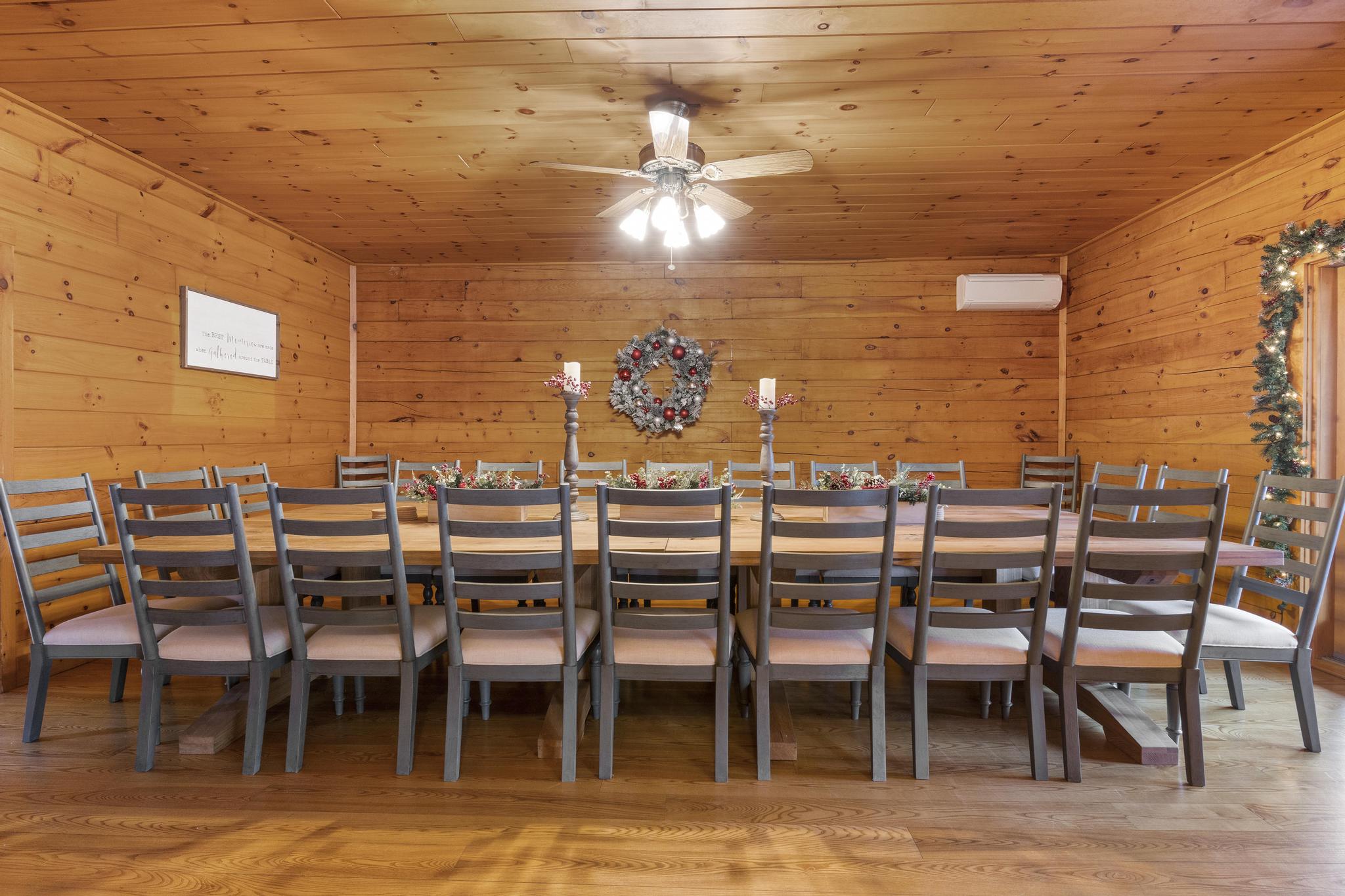
The most common objection to investing in an offsite retreat is cost. It is a reasonable question that deserves a rigorous answer. The cost of a two-day corporate retreat for a team of 14, including lodging, meals, and facilitation, might run between $5,000 and $15,000 depending on location and format. At Serenity Woods, a weekday overnight for 14 guests is $1,900 with the cleaning fee, about $136 per person, before food and facilitation. Set against the fully-loaded compensation cost of 14 employees for two days, that number is roughly equivalent to what you are already spending. The question is not whether to spend the money, it is whether to spend it on two days of fragmented, interrupted, low-quality in-office work, or two days of focused, aligned, relationship-deepening strategic work in an environment designed to produce outcomes.
Consider the downstream value of a single strategic decision made correctly at an offsite that would have been made incorrectly (or deferred indefinitely) in a standard meeting format. Consider the cost of a single key employee departure driven by burnout or feeling disconnected from leadership, where replacement costs typically run 50 to 200 percent of annual salary. Consider the compounding value of a team that trusts one another enough to move faster, communicate more directly, and waste fewer cycles on ambiguity and politics.
Organizations that invest consistently in structured team retreats report measurable improvements across three categories of outcomes:
- Strategic Clarity: Faster decision-making cycles, fewer rework loops, and more consistent execution against stated priorities.
- Retention and Engagement: Employees who feel seen, connected to colleagues, and aligned with organizational purpose leave less often. A single retained senior employee typically justifies the cost of several years of retreat investment.
- Communication Velocity: Teams that have built genuine interpersonal trust communicate more directly, escalate problems faster, and spend less organizational energy on conflict avoidance and back-channel communication.
None of these outcomes are guaranteed by the retreat itself. They are produced by retreats that are designed with intention, led with courage, and followed through with discipline. The environment accelerates the process, it does not replace the work.
Why the Setting Matters: Serenity Woods as a Case Study in Environmental Design
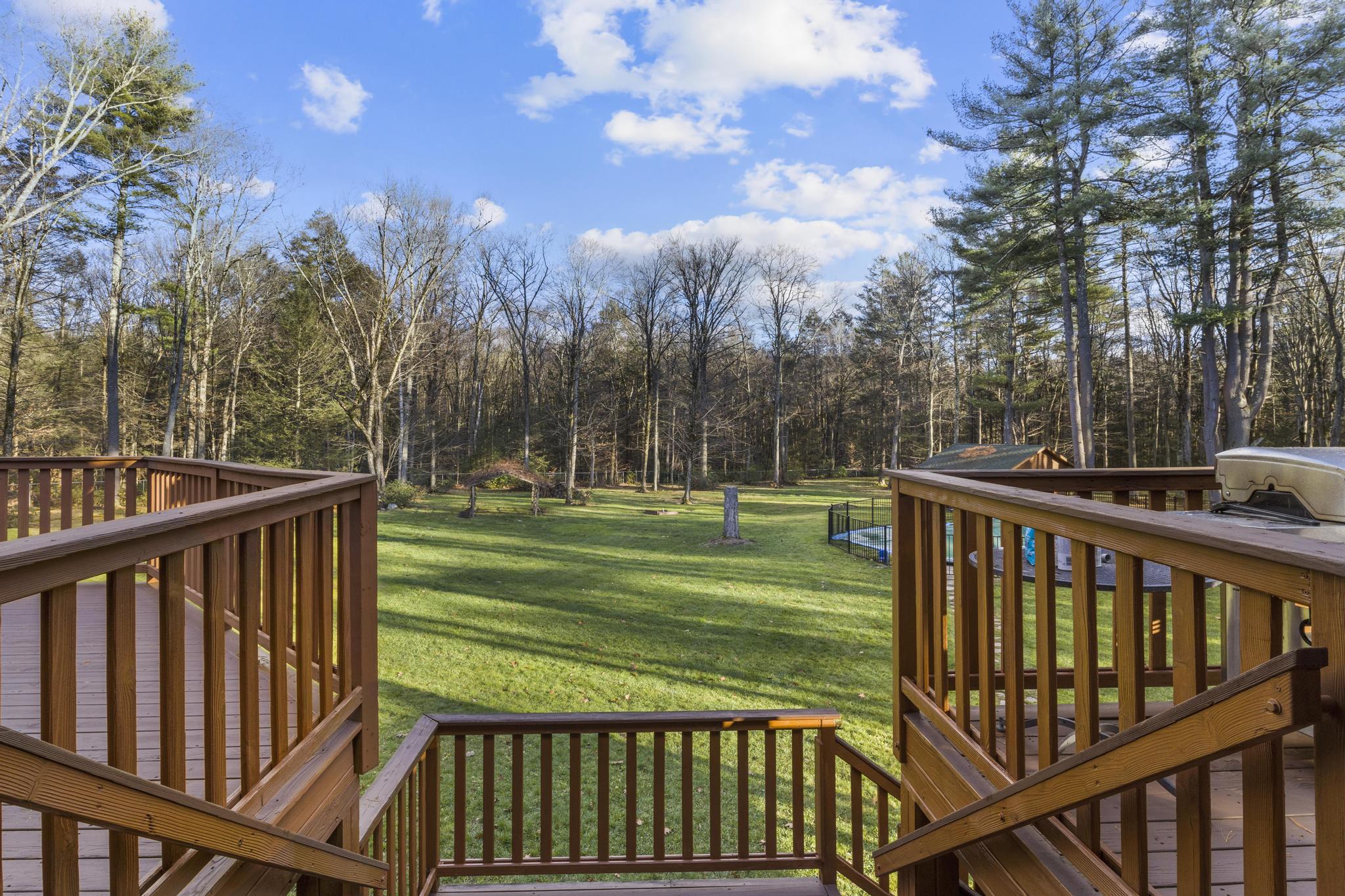
To ground all of the above in a concrete, real-world context: Serenity Woods in New Hartford, Connecticut, represents a useful illustration of how the physical properties of a retreat venue either support or undermine the strategic objectives described throughout this guide.
The property's total seclusion (at the end of a half-mile private driveway, on 62 acres with no neighboring properties in sightline) directly addresses one of the primary failure modes of corporate retreats: the inability to genuinely separate from the context of everyday work. The psychological effect of true privacy is not trivial. Research on restorative environments shows that the perception of being "away" (characterized by distance, novelty, and freedom from ordinary demands) is a prerequisite for the cognitive restoration that makes creative and strategic work possible.
The single-structure format of the main cabin means the entire team shares a common living environment throughout the event. This is architecturally distinct from conference center retreats where participants scatter to individual hotel rooms after sessions. Shared living spaces generate the informal interactions, the spontaneous conversations, and the human texture of relationship-building that intentional programming alone cannot produce. A team that shares a kitchen, a living room, and a morning coffee routine for two days returns to the office knowing each other in a qualitatively different way.
The specific combination of purpose-built spaces at the property (an expansive Great Room for main sessions, a full kitchen with large island for collaborative meals, a wrap-around deck and gas fire pit for evening connection, a lower-level recreation area for energy management, and a private fitness center) maps closely to the "varied environment" principle: the research finding that teams perform better across a retreat when they move through physically and functionally distinct spaces rather than remaining anchored in a single room for the duration. For a detailed look at how these spaces are configured and what they can accommodate, explore the complete amenities and features of the property.
Ready to Design a Retreat That Actually Moves the Needle?
The frameworks in this guide are only as effective as the environment you choose to run them in. A private, secluded setting with the right mix of formal and informal spaces is not a luxury addition to an offsite, it is a functional requirement for the outcomes you are after.